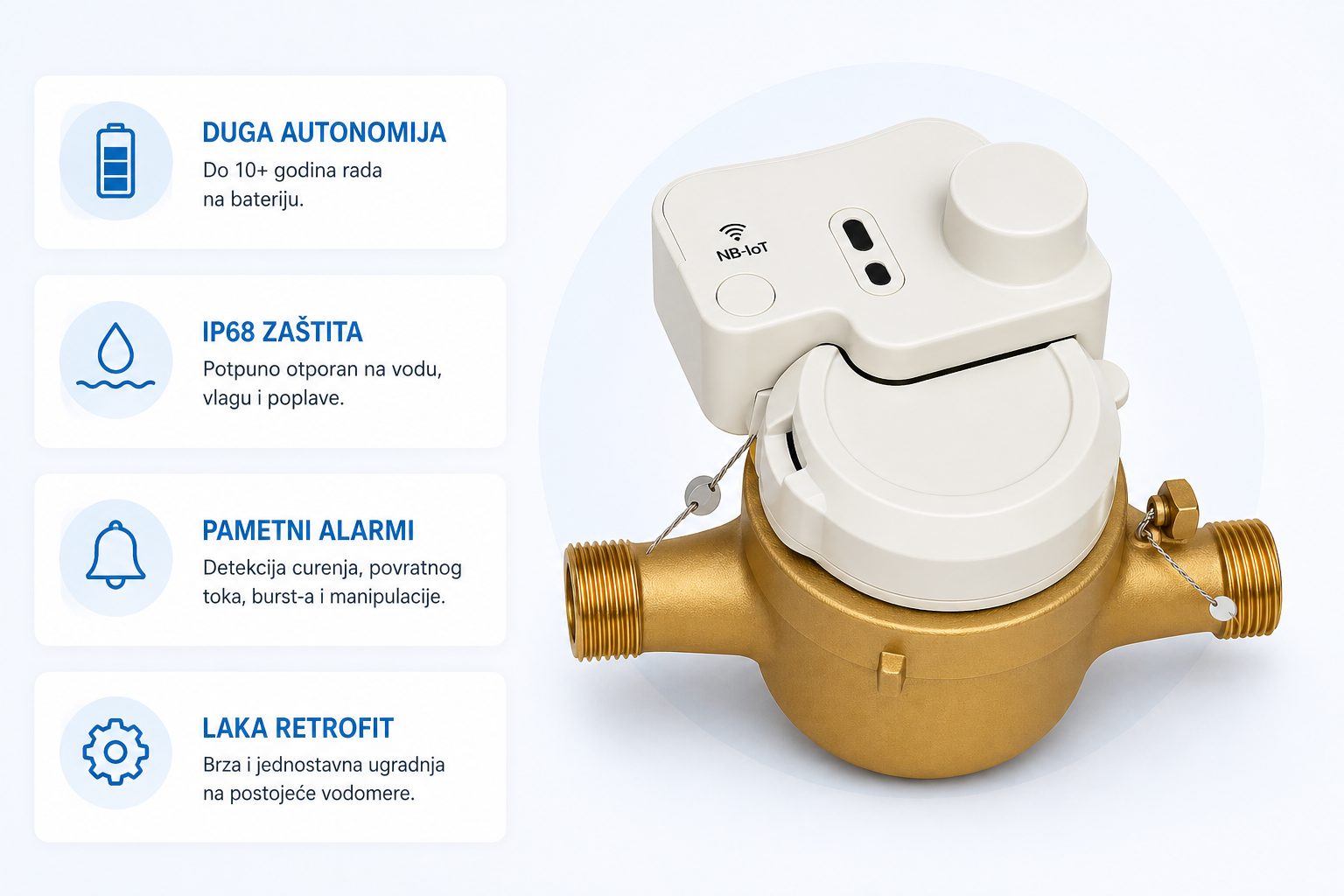
The metering point measures consumption, battery status, events and alarm conditions.
GAT D.O.O. Novi Sad
GAT Fleximeter for remote water meter reading and early leak detection.
GAT Fleximeter enables remote water meter reading. NB-IoT communication and district water balance. Leak alarms and water loss reduction.

20,000metering points from the project documentation
8,760annual data points per meter with hourly reporting
24-48 htarget response for early leak detection
90 m³saving per 3 m³/day leak detected one month earlier
How it works
From metering point to work order in four verifiable steps.
The communication module sends readings through a narrowband Internet of Things mobile network.
The server validates data, stores history and prepares values for billing and analytics.
Analytics marks leaks, anomalies or priorities for field inspection.
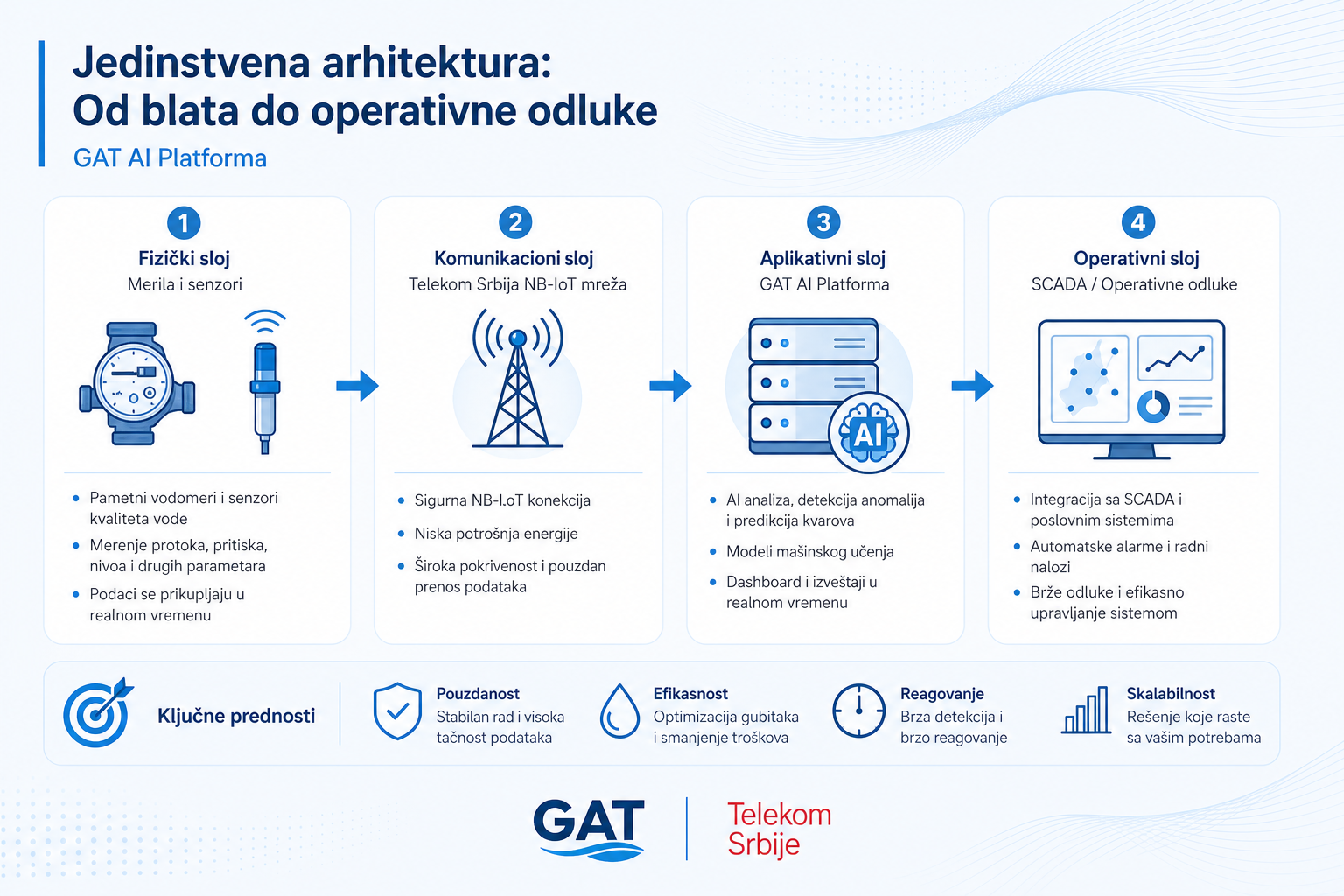
Solution architecture
A professional system is not only a water meter with a radio module.
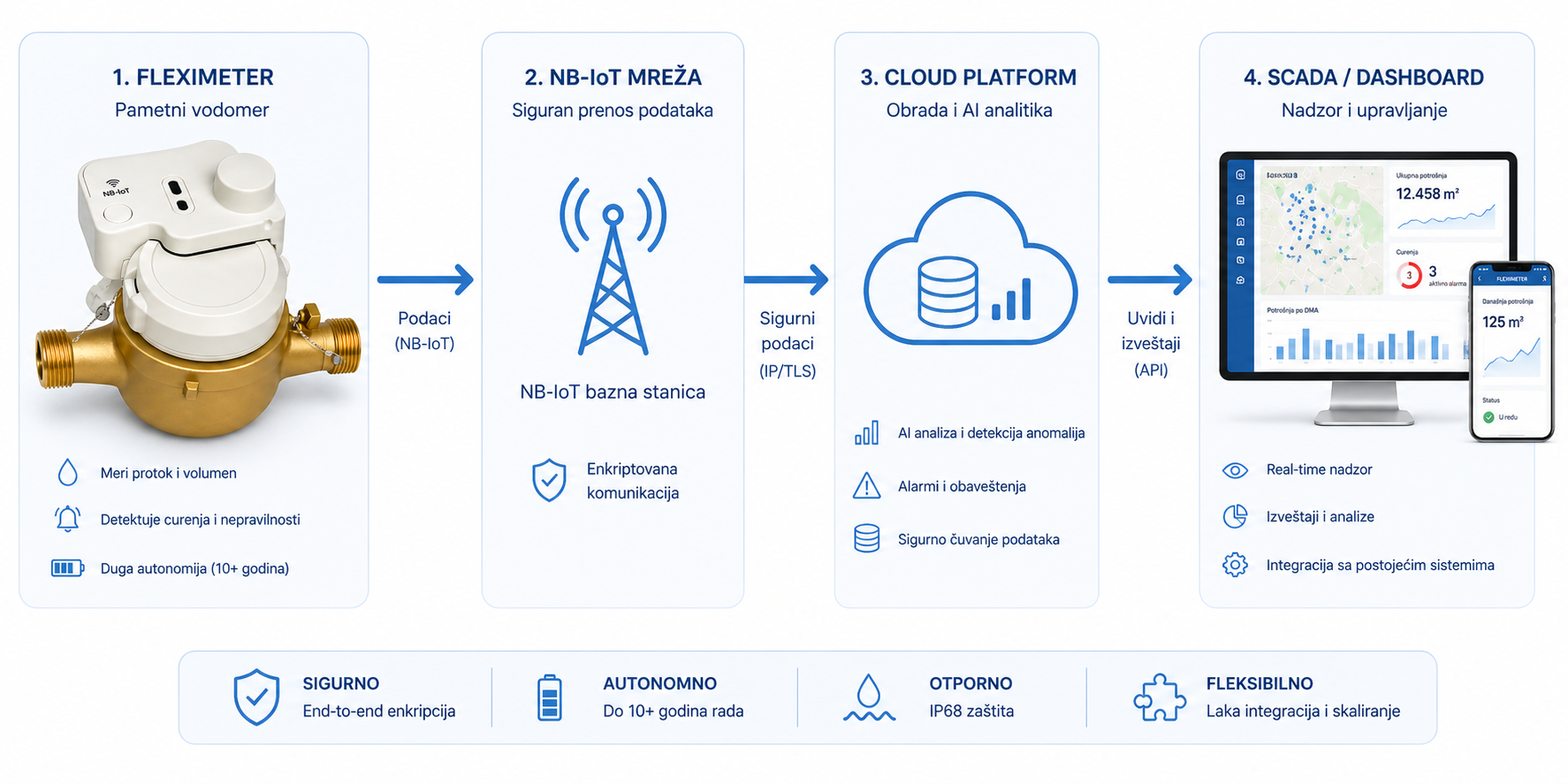
GAT Fleximeter separates the smart water meter, NB-IoT communication, platform and operational process. The metering point sends data, the server validates it, analytics detects leaks or deviations, and the field team receives a clear priority for inspection.
- 01Metering point
Water meter, communication module, alarms and local memory.
- 02NB-IoT transfer
Status, battery, signal and alarm events are transmitted automatically.
- 03Platform
Database, validation, reading history and billing interface.
- 04Analytics
Night flow, anomalies, district balance and ranked priorities.
- 05Work order
Clear alarm ownership, field verification and closed intervention.
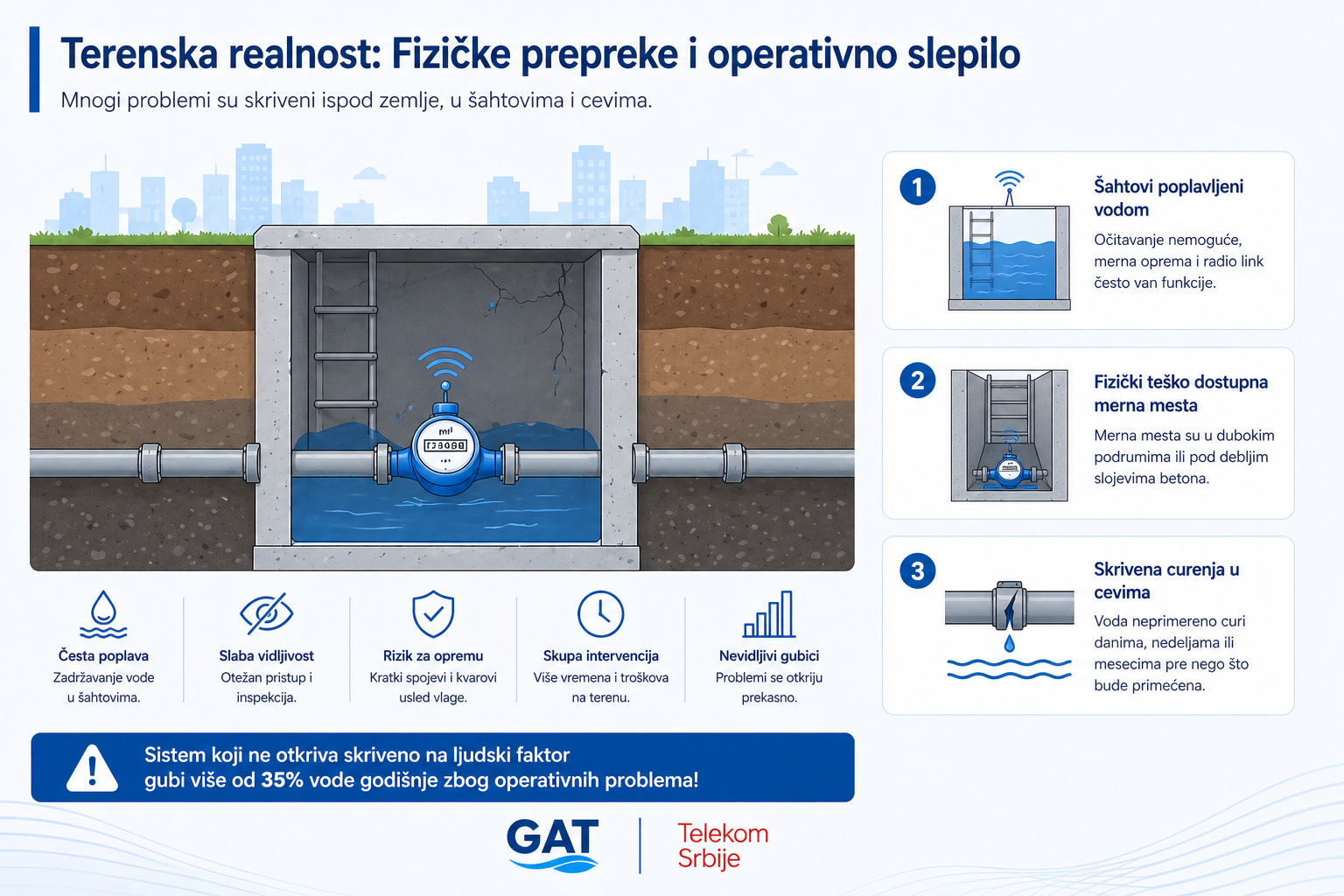
Field reality
Digitalization starts where manual meter reading fails most often.
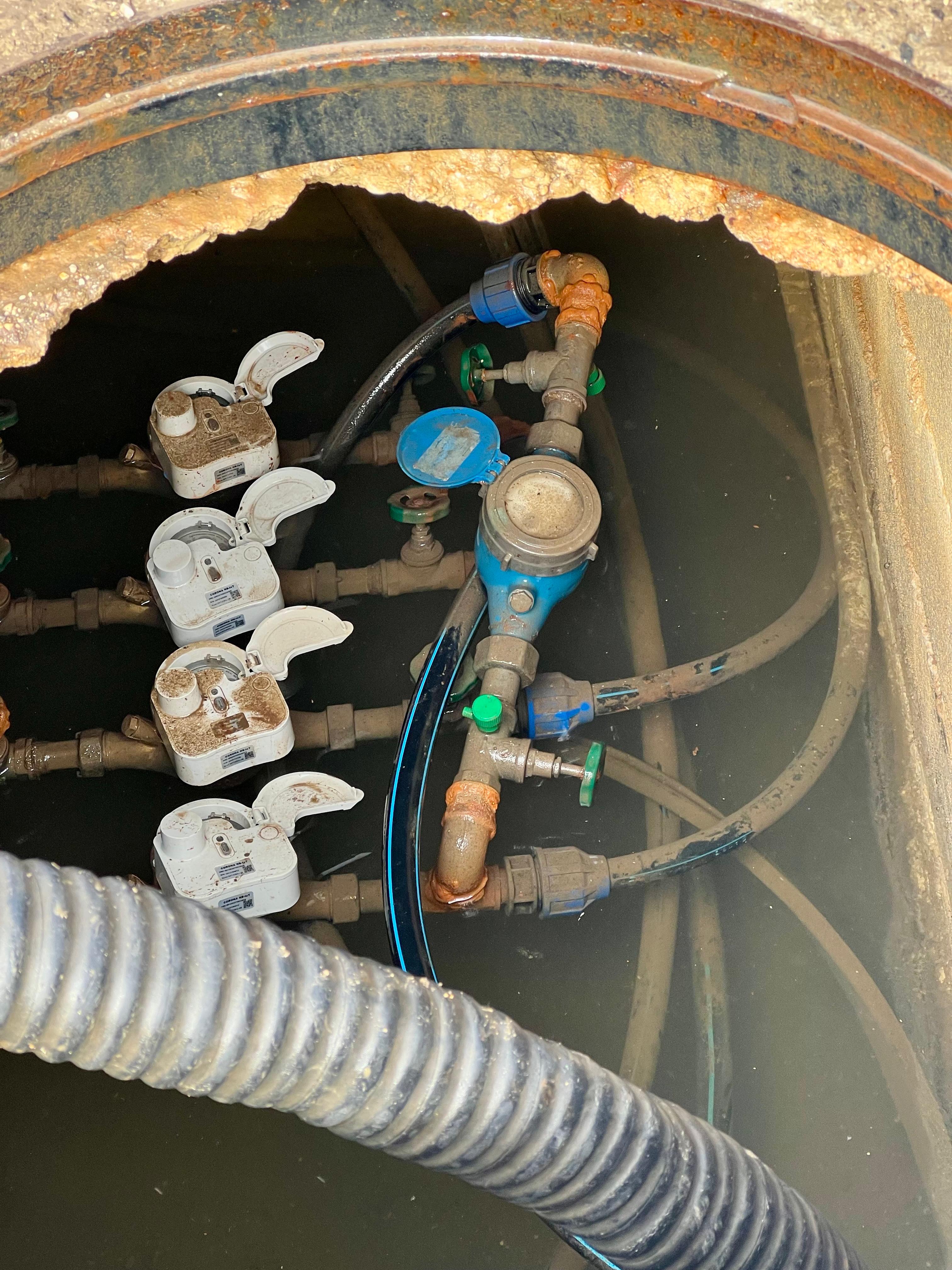
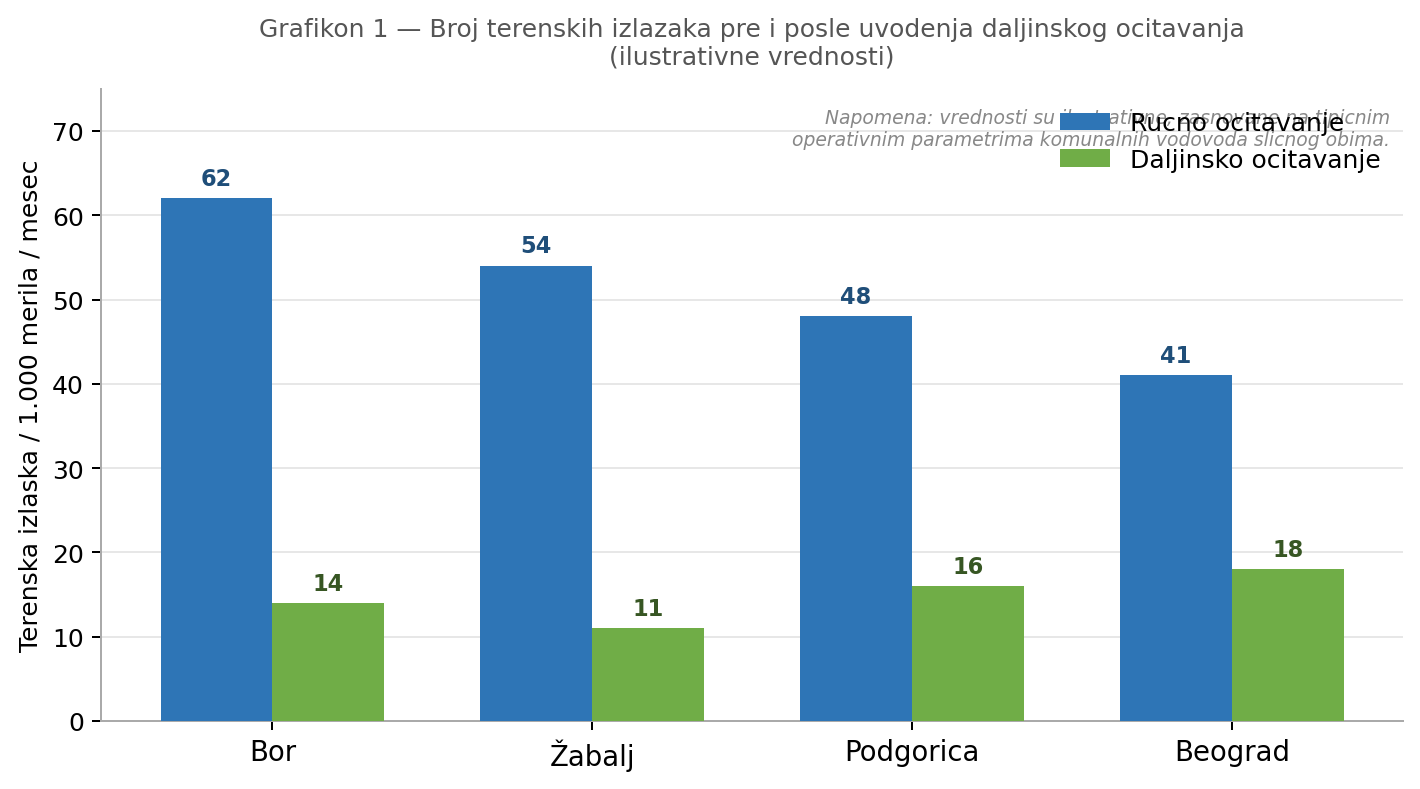
Project images show why monthly field reading is not enough: flooded chambers, inaccessible spaces, damaged meters and estimated values. This is not only a reading problem, but a water loss management problem.
Communication layer
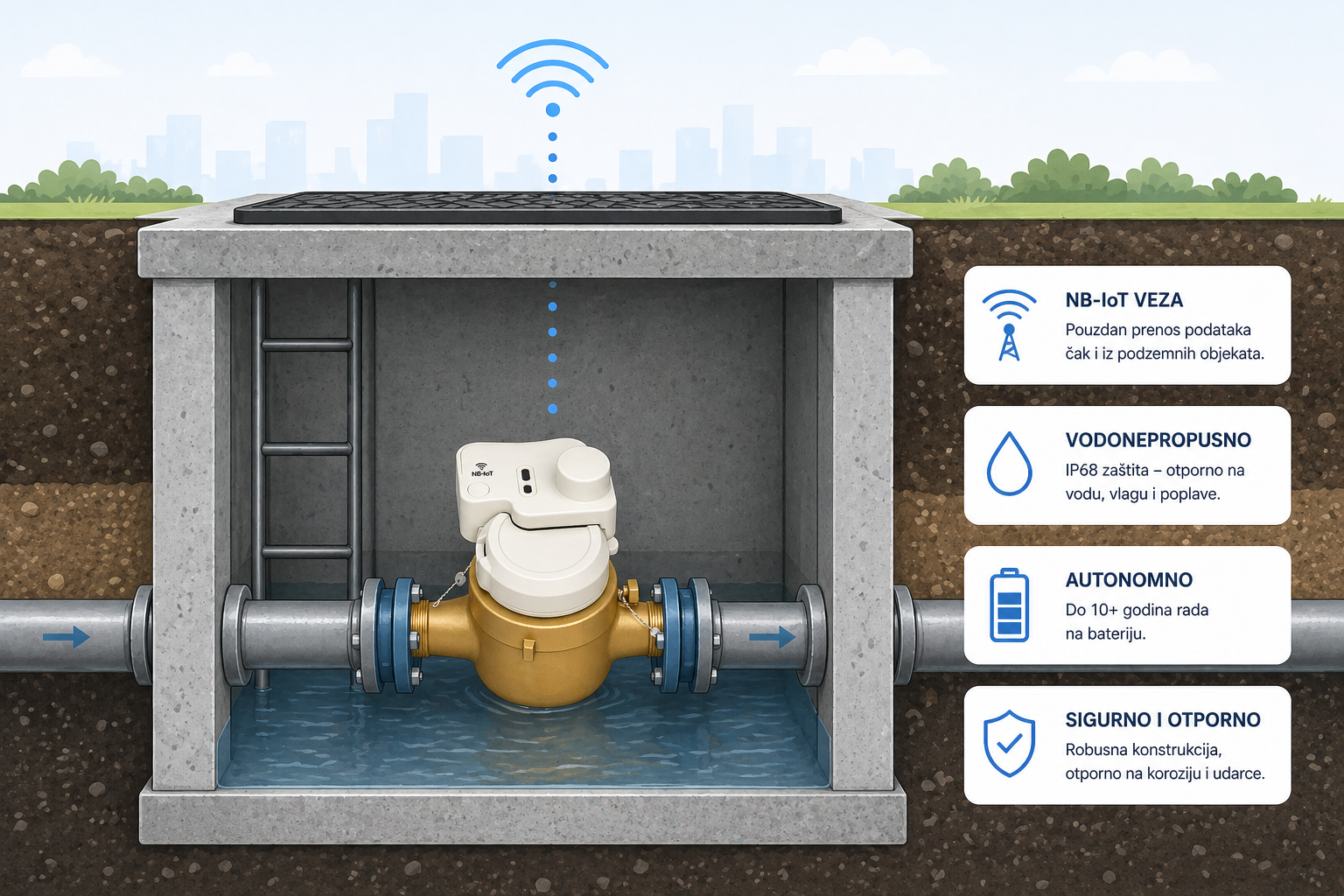
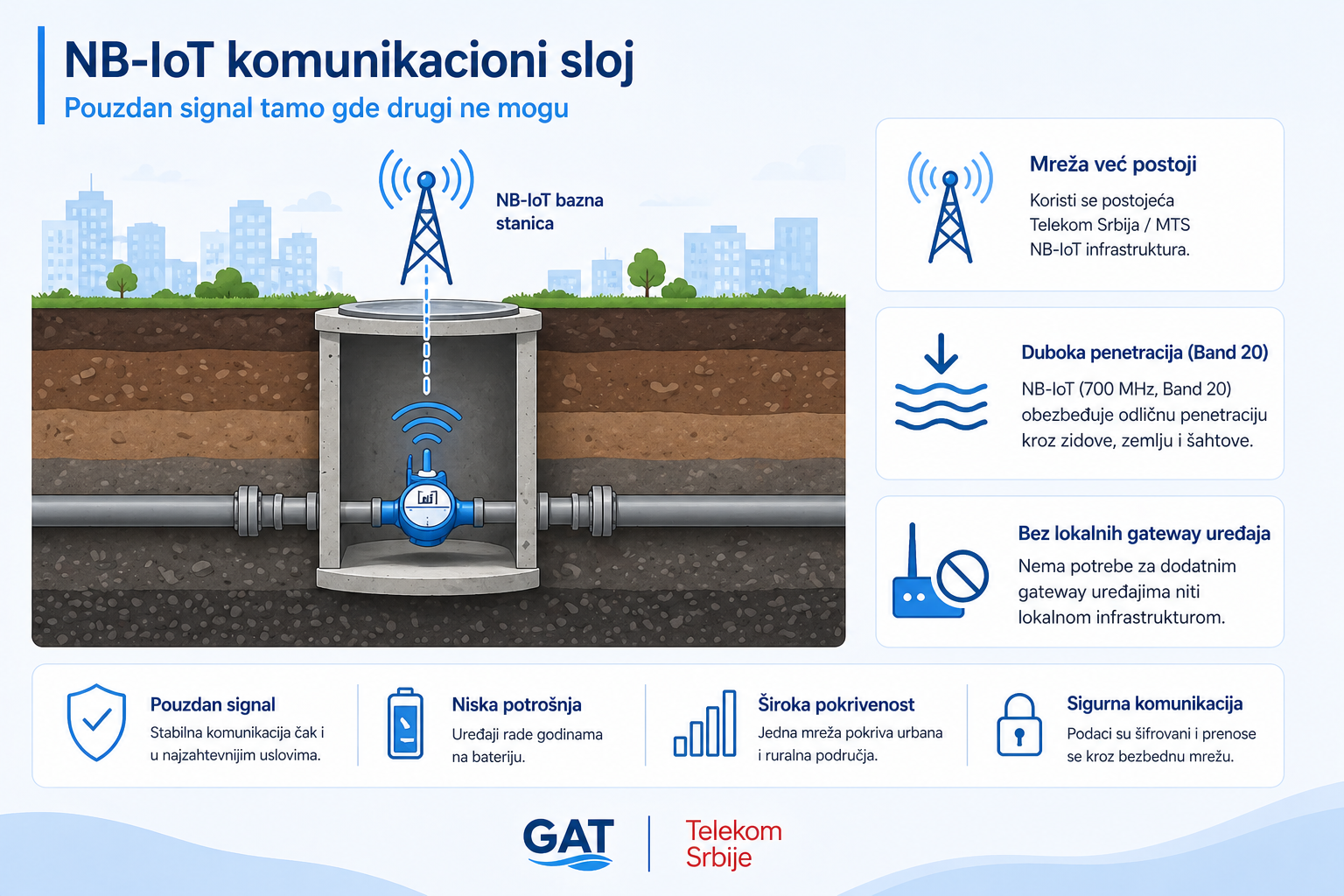
NB-IoT is suitable when coverage, battery life and existing mobile infrastructure matter.
GAT Fleximeter is designed as a smart water meter with a communication module that reduces field visits, automates data collection and supports hard-to-access metering points. An NB-IoT water meter is suitable for small data volumes and long battery operation, while system quality depends on real network coverage, correct installation and signal control.
Datareading, history, battery and signal level
Alarmsremoval, magnet, reverse flow and leakage
Operationparameter setting without field visit
Limitverify real coverage before mass deployment
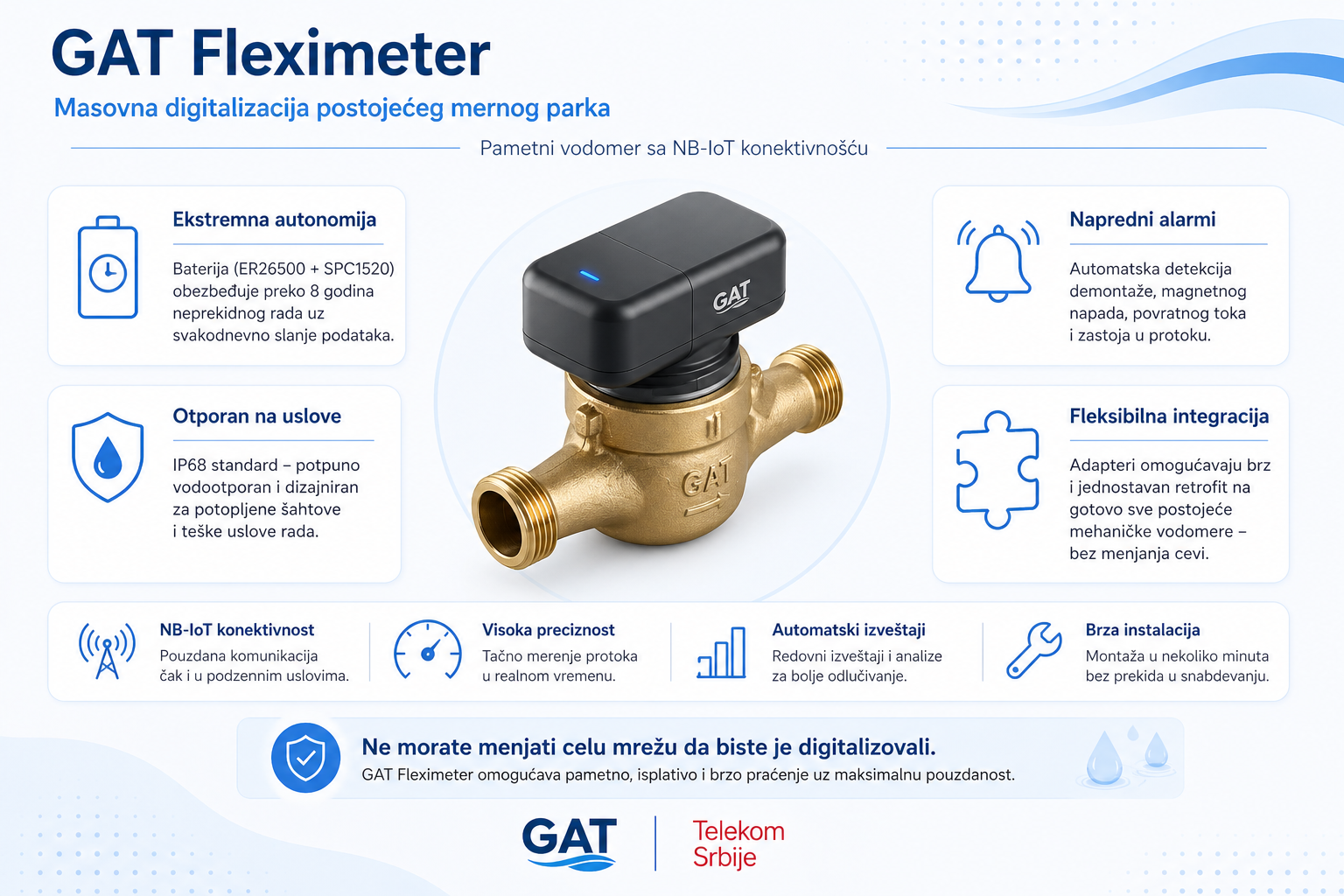
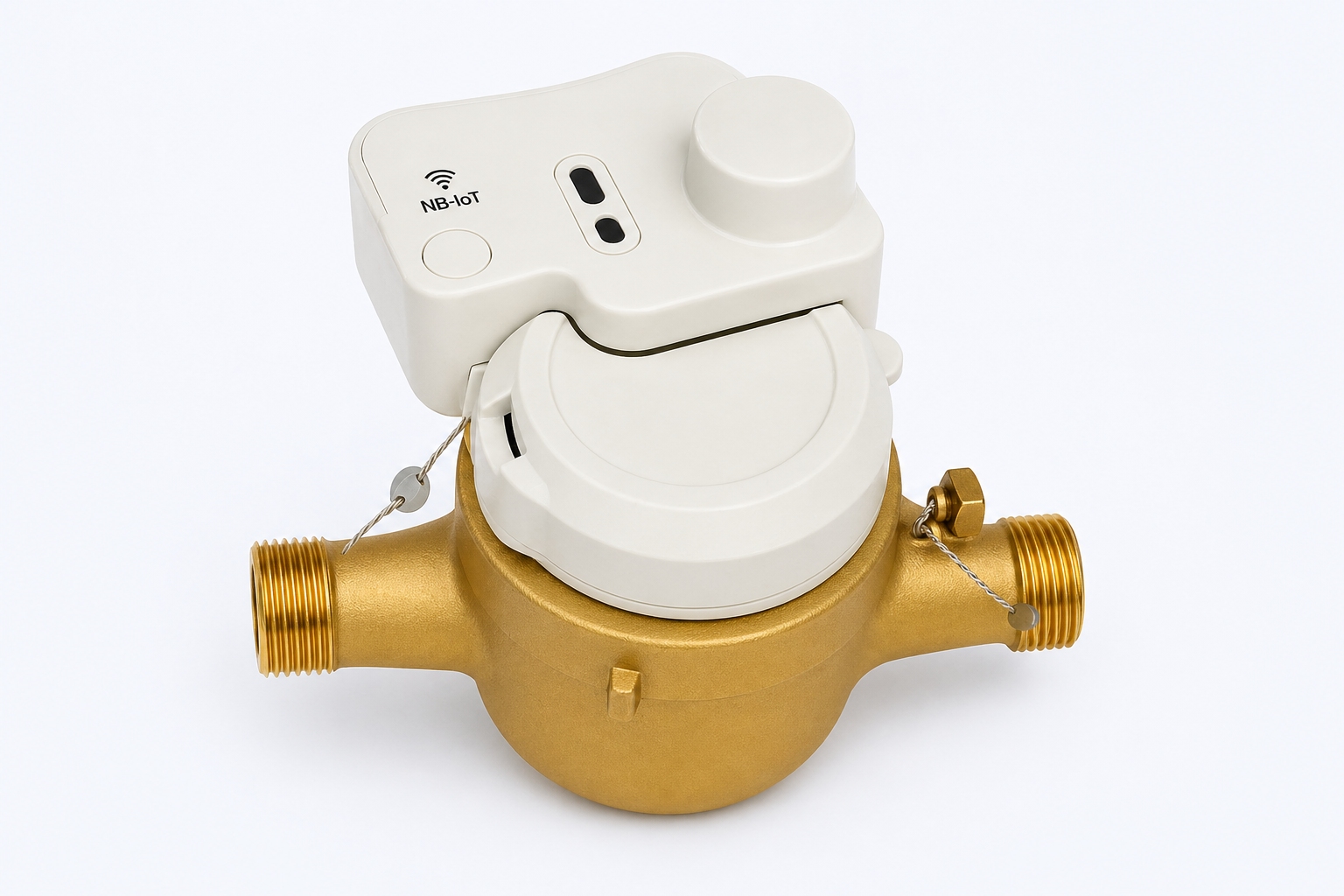
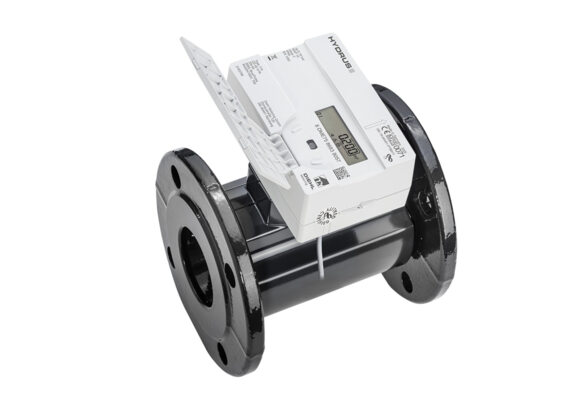
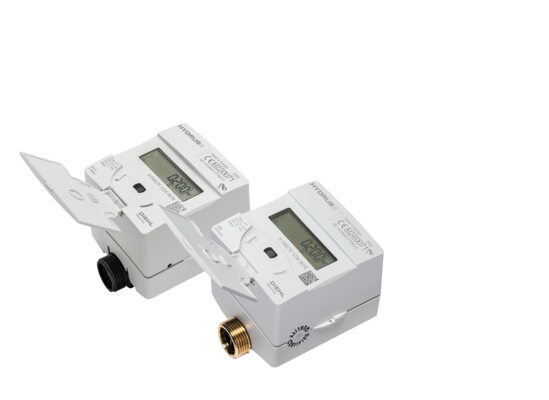
Metering equipment
The meter is selected according to the zone, consumer profile and detection requirement.
Mass deployment base
A mechanical water meter with a communication module is a fast path for digitalizing an existing meter park. It supports reading logistics and general balance control.
Critical points
Ultrasonic metering provides higher sensitivity, additional diagnostics and greater value for complaint locations, large consumers and district inlets.
Metrology
Billing use requires a valid type certificate, periodic verification and measurement traceability.
District Metered Area
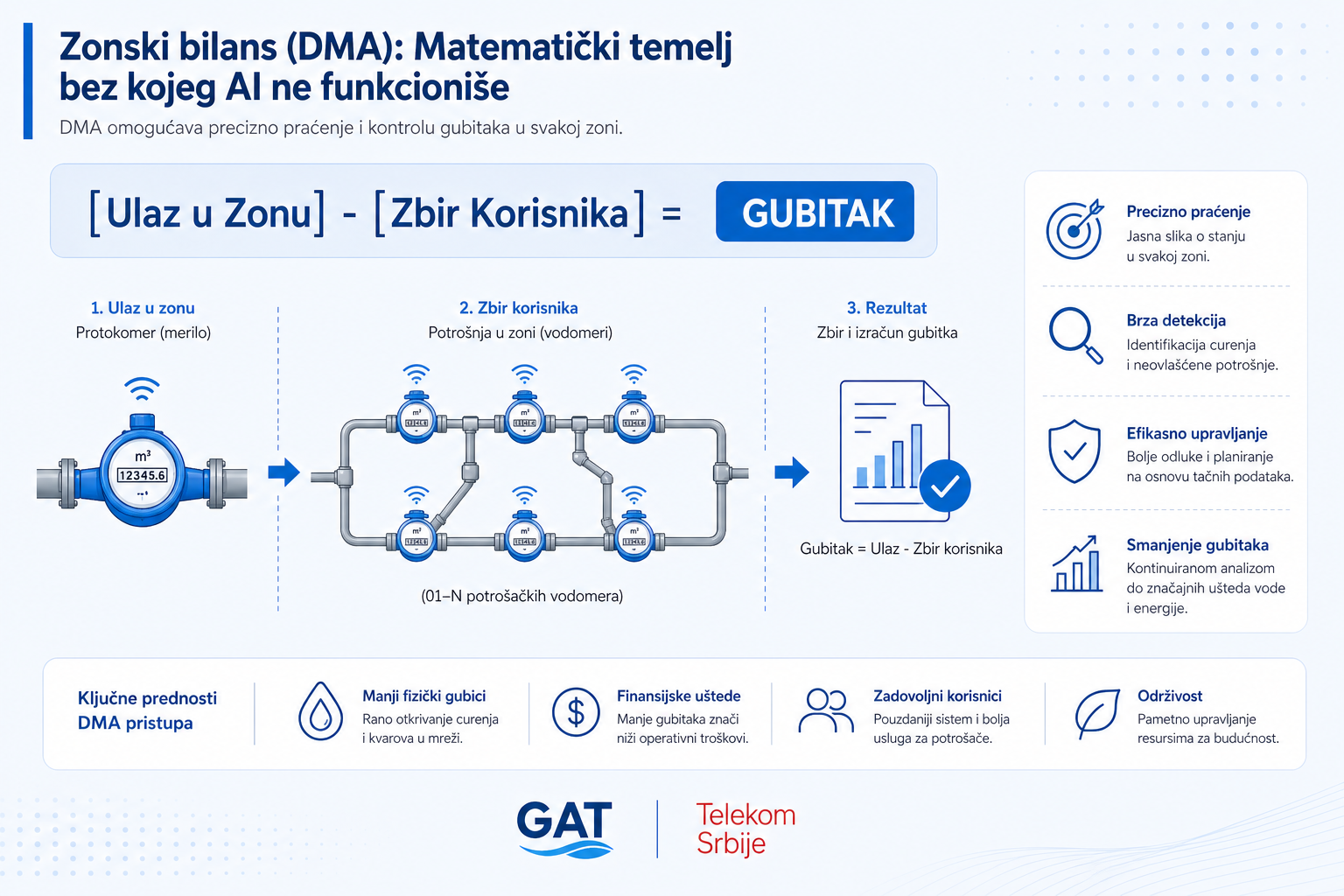
Without a zone inlet measurement there is no reliable answer where water is lost.
Smart customer meters provide consumption. An electromagnetic flow meter at the district inlet provides the reference. The difference between those two levels becomes the operational water loss signal.
Zone inlet
-
Customer sum
=
Loss
Data analytics
Value appears when the system proposes an action, not when it only shows a chart.
The analytics layer does not replace billing software. It reads data, detects patterns, compares consumption with history and returns prioritized lists of users, zones and interventions.
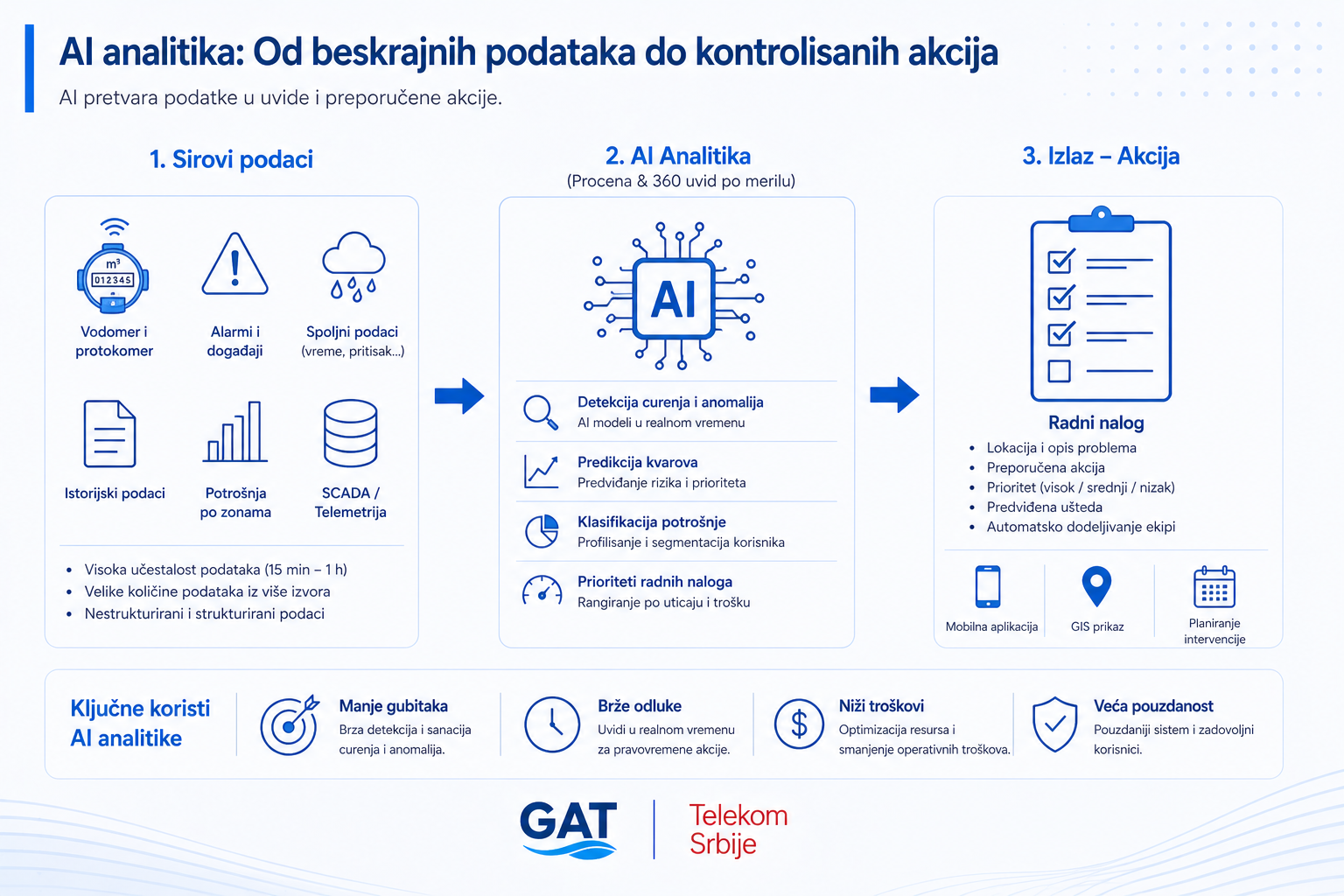
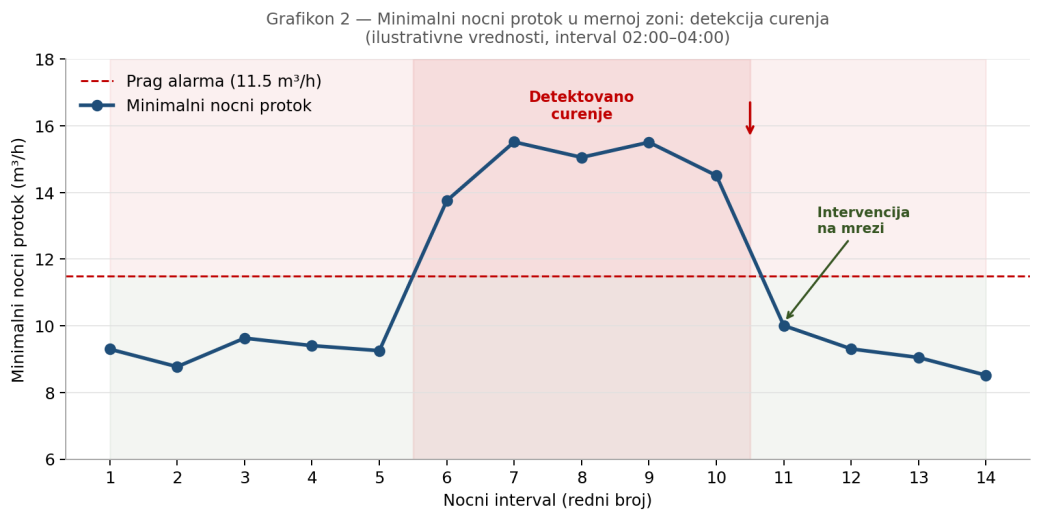
Minimum night flow
Persistent excess flow during low-consumption hours indicates leakage.
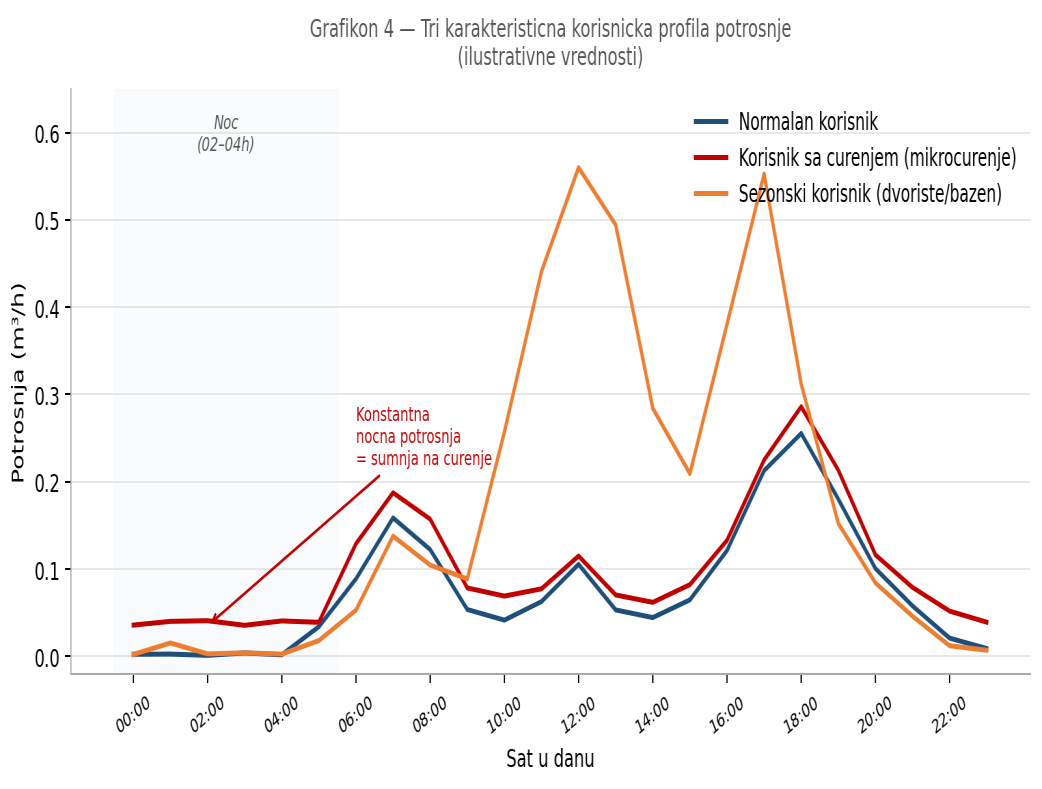
User profile
Consumption is compared with the user's own history and similar users.
District balance
Zone inlet flow is compared with the sum of customer meters.
Work order
The output is a priority list, not a passive report.
Alarms and diagnostics
The operator should receive a clear alarm and priority, not search for a problem in a table.
The alarm layer separates normal consumption from conditions that require verification, field intervention or inspection of the metering point installation.
Continuous flow, increased minimum night flow and long consumption without interruption.
Detection of improper flow direction and possible hydraulic or installation issues.
Unauthorized opening, attempt to influence the meter or unusual alarm event.
Planned replacement before communication from the metering point is lost.
Monitoring missing messages, signal quality and module re-registration.
Consumption profile deviating from user history or expected operating mode.
Integration with existing systems
Remote reading must work with the systems already used by the water utility.
The solution is designed as a layer that receives field data, normalizes it and provides reports, data export or application programming interfaces for existing business systems.
Security and data ownership
Metering data must remain controlled, traceable and available to the system owner.
The architecture can be designed as a local system, controlled server system or hybrid model. Data access, user roles, export and integrations are defined before the pilot zone so later expansion remains controlled.
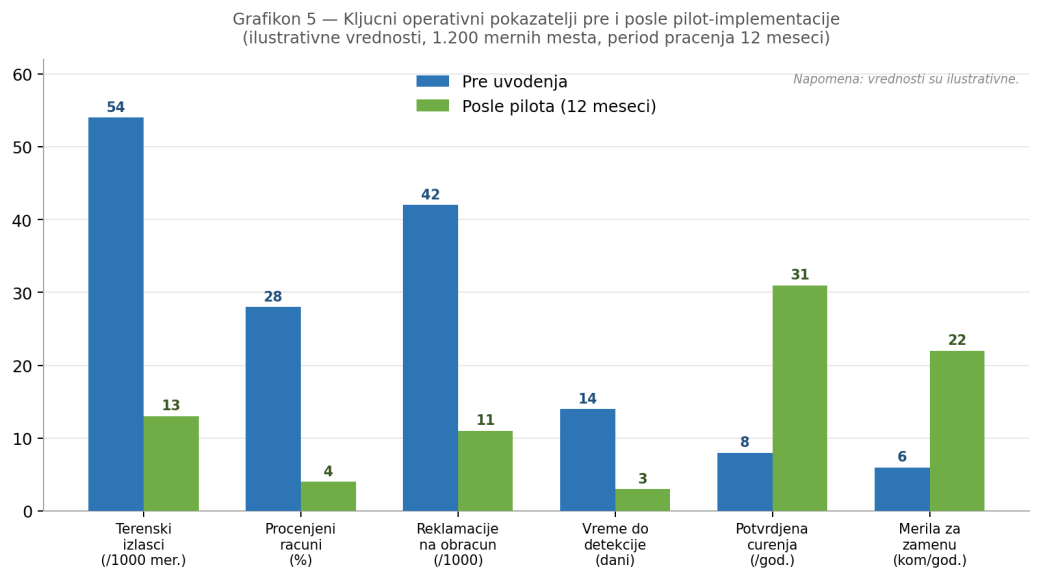
Operational effect
Effect is measured in days, cubic meters and field visits.
GAT delivery scope
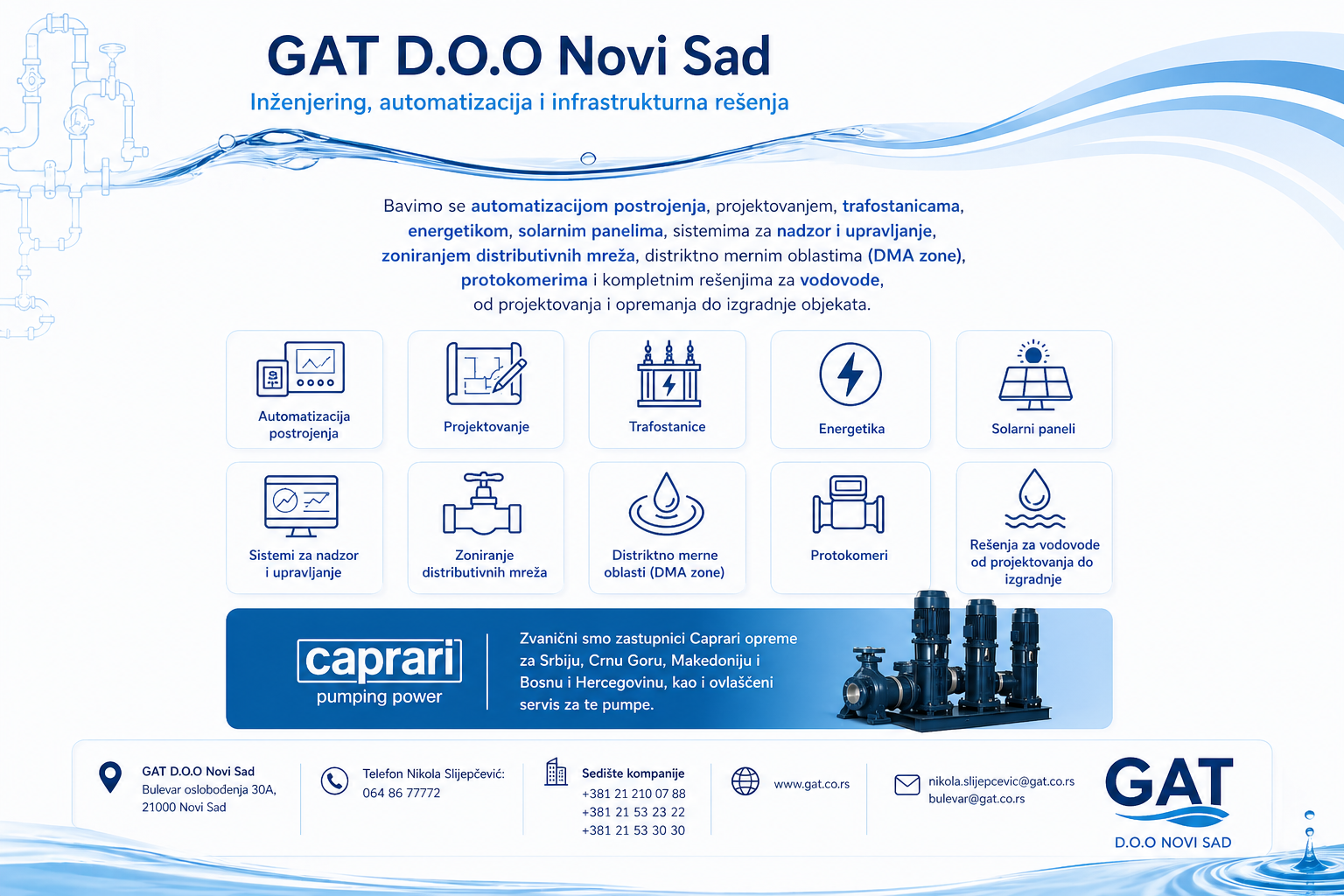
One integrator for metering, automation, monitoring and documentation.
Remote reading
NB-IoT water meters, heat meters, wireless M-Bus and billing integration.
Automation
Programmable logic controllers, control cabinets and pump frequency regulation.
Supervisory control
Monitoring, alarms, trends, energy indicators and work orders.
District metering
District metered areas, electromagnetic flow meters and implementation planning.
AI server
Local analytics on water utility equipment, without mandatory public cloud operation.
Documentation
Technical specifications, bills of quantities and investment analysis.
Who it is for
The solution is intended for systems where manual reading is no longer fast or reliable enough.
The greatest effect is achieved where there are many metering points, hard-to-access chambers, uneven consumption profiles and a need to detect water losses before bills and complaints.
Remote reading, alarms, consumption history and intervention priorities.
District balance, minimum night flow and inlet-to-customer comparison.
Flow monitoring, unusual consumption, interruptions and regime deviations.
Basis for loss reduction programs, metering modernization and transparent reporting.
Delivery package
Complete chain from metering point to report and work order.
Water meter, communication module, alarms, local memory and tamper protection.
Narrowband Internet of Things mobile network, signal check, activation and transfer monitoring.
Data reception, reading validation, history, user overview and export to billing.
Night flow, anomalies, leak alarm, district balance and priority ranking.
Connection with existing billing, monitoring display and maintenance process.
User training, technical documentation, reports and support during system expansion.
Pilot zone
The fastest path to a decision is a limited zone with measurable results.
The pilot zone should include enough meters to verify radio coverage, reading quality, alarm frequency, district balance and maintenance response.
A pilot zone does not require replacement of the entire meter park. The goal is to verify communication, data quality and operational effect on a limited sample.
Send pilot zone request30-90 daystrial operation period
100-500recommended number of metering points
24-48 hearly leak detection target
Reportcoverage, readings, alarms, losses and expansion plan
Inputs required for assessment
Basic technical inputs are required for a useful proposal.
- number of meters and approximate diameters
- existing water meter types and chamber condition
- locations or zones planned for pilot deployment
- existing billing system and data exchange format
- availability of district metering and flow data
Practical proof
The pilot zone result must be measurable, not only visually displayed on a platform.
The pilot measures successful reading rate, radio-signal stability, number of alarm events, district balance deviation and time from alarm to field verification. These data points support technical and economic decisions about system expansion.
Downloads
Technical documentation, catalogue and conference material.
The documents are available for download and can be used for technical discussions, pilot zone preparation and internal assessment of remote water meter reading solutions.
Technical paper on using NB-IoT communication for remote water meter reading.
Download PDFCatalogue of solutions, equipment and functions for GAT Fleximeter and NB-IoT metering.
Download PDFPresentation material on smart water systems, analytics and leak detection.
Download PDFOverview of GAT technical capabilities, automation, infrastructure and system integration.
Download PDFMaterial on Internet of Things, pumping systems, automation and infrastructure monitoring.
Download PDFWater meter calibration laboratory according to MID requirements, for meters up to DN150.
Download PDFPilot zone
The first step is an audit of metering points and district balance.
A professional pilot requires zone definition, user database check, meter type review, chamber accessibility, NB-IoT signal check, inlet flow measurement and alarm closure process.
Regional coverage
We deliver projects in Serbia, Bosnia and Herzegovina, Montenegro and North Macedonia.
GAT D.O.O Novi Sad VAT nr 100447637 www.gat.co.rs
Next step
Send basic information about the zone and number of meters.
GAT prepares a pilot implementation proposal with scope, technical conditions and acceptance criteria.